
Menu
Porcelain · Technique
Opaque painted enamels adapted from cloisonné, applied to white porcelain in the Qing imperial workshops.
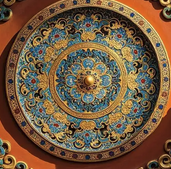
Technique
Falangcai enamels were adapted from cloisonné metalware pigments and applied over the glaze on plain white porcelain blanks, then fixed with a low-temperature firing. The pigments are opaque and sit as a distinct painted layer on the surface rather than fusing into the glaze, which allows for very fine brushwork and layered colour mixing not possible with underglaze techniques.
Production was tied directly to the Qing imperial court, with plain porcelain blanks sent from Jingdezhen to palace workshops in Beijing for painting and firing under court supervision, rather than being decorated at the kiln site itself. This separation of body production and surface decoration is part of what distinguishes falangcai from other enamel systems developed and executed entirely at Jingdezhen.
The brushwork is characteristically fine and painterly, closer to court painting conventions than to workshop pattern repetition, with strong colour opacity and tight control over shading within a single motif.
Contemporary objects connected to this tradition
Continue exploring
Decorative system
Overglaze Decoration