Menu
Blue Fir · Porcelain
To understand Jingdezhen porcelain, begin with what you can see — form, surface and image — then look beneath them: material, technique and time.
An object can be read from several directions. Together, they reveal how it was made, why it looks the way it does, and where it belongs within Jingdezhen’s long ceramic language.
Begin reading ↓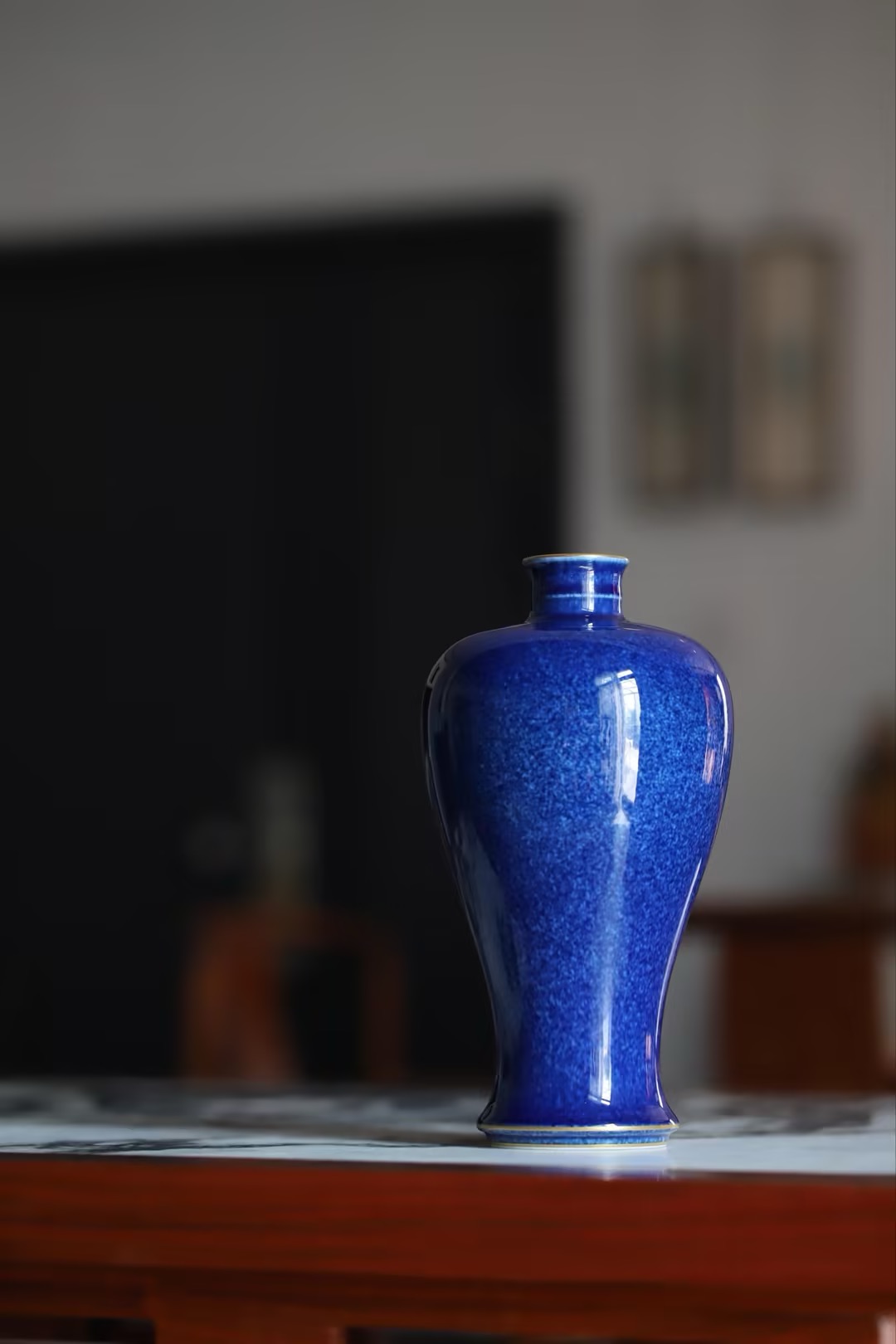
Reading an object
A porcelain object is never only a shape or a decoration. Its proportions, material, glaze, firing, imagery and historical references work together.
01 · Form
Shape, proportion, profile, foot, shoulder, neck and rim.
02 · Surface
Glaze, colour, decorative system and the way light moves across the object.
03 · Technique
How the piece was formed, decorated, glazed and fired.
04 · Material
Porcelain body, glaze, pigments, mineral composition and firing behaviour.
05 · Image
Motifs, symbols, brushwork and visual vocabulary.
06 · Time
The historical language, period references and technical traditions behind the object.

01 · Form
Before decoration, there is form. Chinese porcelain developed a precise vocabulary of bowls, cups, bottles, jars, vases and ritual forms. Small changes in proportion can completely alter the character of an object.
Explore forms →
02–04 · Surface, Technique, Material
What appears on the surface is the result of several systems acting together: glaze, pigment, firing, carving, painting and application sequence.
05–06 · Image and Time
Image
Dragons, lotus, landscapes, flowers, animals and auspicious symbols formed a visual language that changed across courts, markets and centuries.
Explore motifs →Time
The same materials and forms can mean something very different in Song, Yuan, Ming, Qing or contemporary Jingdezhen. Historical context changes how an object is read.
Explore periods →