Menu
开片
A network of fine cracks in the glaze, formed by tension between glaze and ceramic body — sometimes arising naturally, sometimes deliberately developed.
Technical Description
Crackle (开片, kāipiàn) is a network of fine cracks in the glaze. It can form during cooling when the glaze tends to contract more than the ceramic body beneath it. The resulting tension is relieved through fine cracks in the glaze layer. This is distinct from a structural crack through the body.
Because tension can persist after firing, crackle may continue to develop over time, occasionally accompanied by a faint, clear sound.
Crackle may arise without being deliberately sought, through the particular relationship between glaze, body and firing conditions. Its pattern is individual to each object.
Potters can also deliberately encourage crackle by adjusting the glaze and its relationship with the body, together with application and firing conditions. The resulting lines are sometimes stained to make the pattern more visible. Blue Fir identifies crackle as naturally occurring or deliberately developed only where the maker provides that information.
Crackled glazes are closely associated with Southern Song Guan ware and with wares traditionally known as Ge, whose dating and attribution remain debated. In the eighteenth century, Jingdezhen’s imperial kilns produced celebrated interpretations of these earlier glazes, notably under Yongzheng and Qianlong.
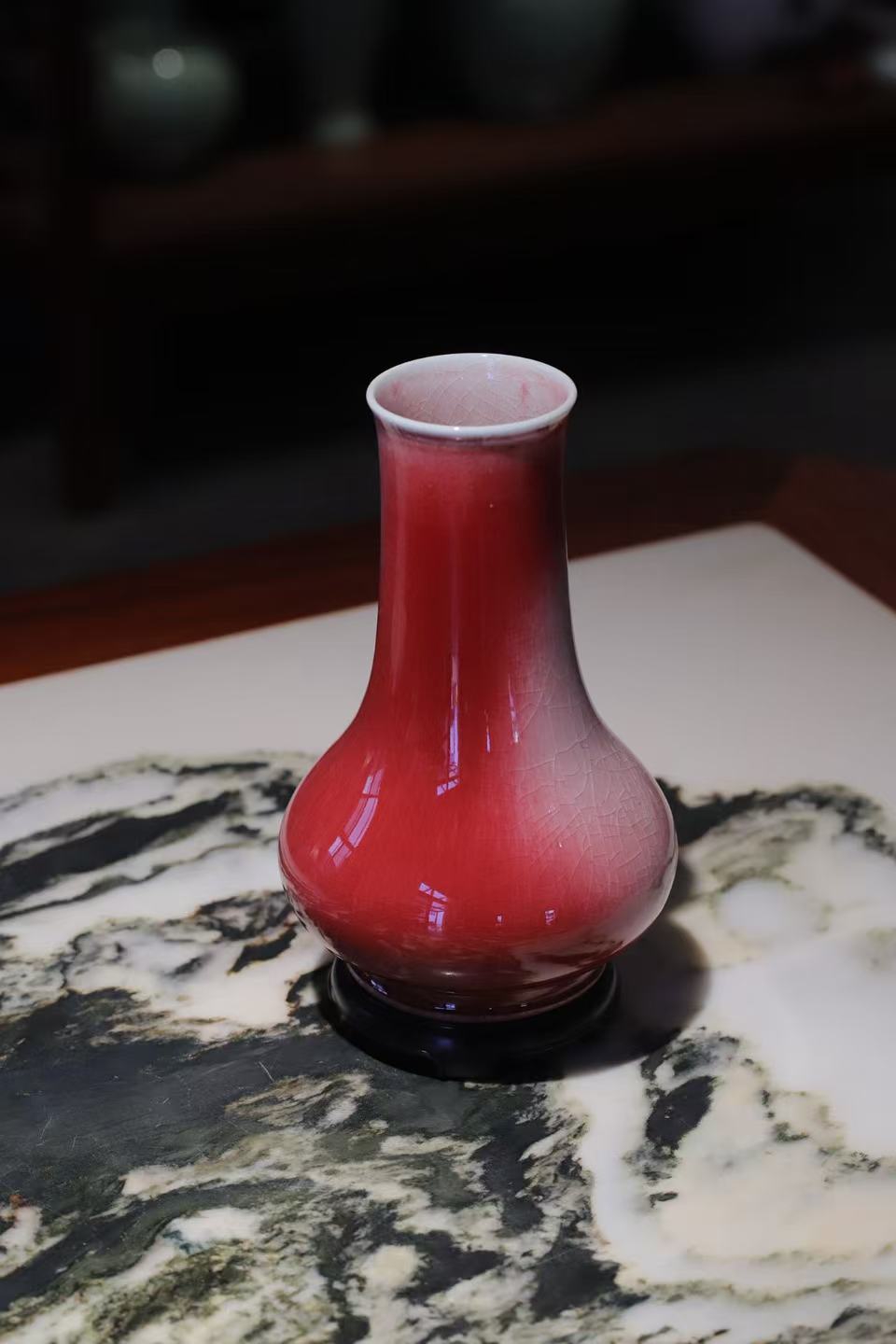
The maker describes the crackle on the Ember Red Pipa Vase as natural. An occasional delicate “ting” may still be heard — a sound the maker describes as the vessel speaking to you.
Further Reading
Blue Fir objects in this glaze or material