Menu
The Tradition · Song Dynasty
960 – 1279
Refinement through reduction. Form as discipline. Surface as restraint.
Historical Context
The Song period marks a structural refinement in Chinese ceramic production. Kiln environments stabilised, glaze control improved, and form proportion became central to aesthetic judgment.
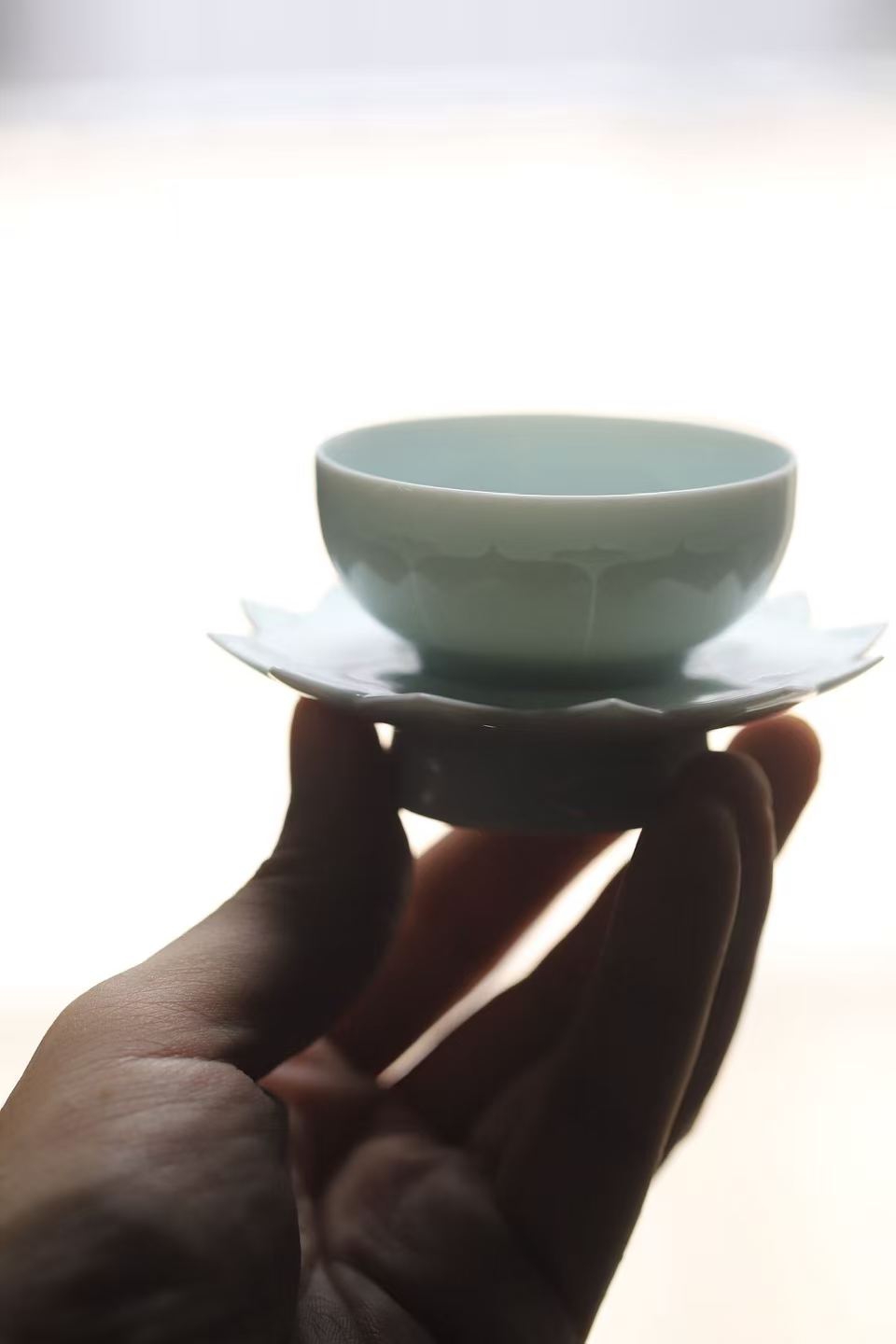
In Jingdezhen, Qingbai porcelain developed into a luminous, thin-bodied expression of technical control and tonal subtlety. The pale blue-white glaze — pooling in carved recesses, thinning at ridges — became the period’s defining visual intelligence.
This period establishes a discipline of restraint that informed every significant development in later imperial production.
Material Development
Increased refinement of porcelain stone
Reduction firing control — sustained atmospheric management
Translucent Qingbai glaze — pale blue-white, luminous depth
Thin, precise foot finishing — evidence of technical intention
Representative Forms
Structural Continuity
The proportional discipline and glaze clarity of Song porcelain informed Yuan blue-and-white development and later Ming refinement. The five great kilns — Ru, Guan, Ge, Ding, Jun — each established a vocabulary that subsequent dynasties would either inherit, contest, or attempt to recover.
Contemporary objects connected to this tradition
Continue exploring