
Menu
鹤纹
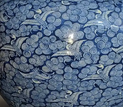
The crane is a symbol of longevity and transcendence, traditionally believed to carry Daoist immortals on its back and to itself live for a thousand years.
Motif Study
In Daoist tradition, the crane is associated with immortality and the attainment of transcendence, said to be the mount of immortals travelling between heaven and earth. Its long lifespan in nature reinforced this symbolic role, making it a standard emblem of longevity alongside the pine and the peach.
Crane motifs appear across Ming and Qing porcelain production, often shown ascending through clouds — reinforcing the connection to celestial travel — or standing beneath pine trees, a pairing that doubles the longevity symbolism. The motif also carries an official-rank association, as the crane was the insignia of the highest-ranking civil officials on Ming and Qing court rank badges, giving crane-decorated porcelain an additional resonance in gift and commemorative contexts.
Cranes are typically shown in flight with wings extended and neck outstretched, or standing with one leg raised in a naturalistic resting posture, almost always accompanied by supporting elements — clouds, pine, or waves — that reinforce rather than compete with the bird as the composition's clear focal point.
Further Reading
Contemporary objects connected to this motif
Continue exploring