Menu
The Tradition · Ming Dynasty
1368 – 1644
Blue-and-white at its height. Imperial restraint perfected. The kilns of Jingdezhen, sovereign.
← All Periods
The Tradition · Ming Dynasty
1368 – 1644
The Ming dynasty formalised what Yuan had begun. Under the Yongle emperor (1402–1424), Jingdezhen was established as the sole supplier of imperial wares, and the Imperial Kiln Factory — Yuyaochang — brought state management to ceramic production for the first time.
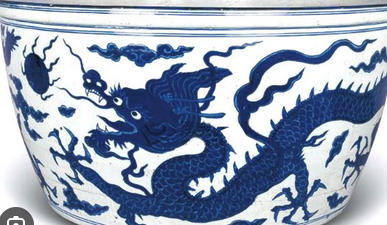
The Xuande period (1426–1435) produced what many scholars regard as the finest blue-and-white porcelain ever made. Cobalt was now sourced domestically, the glaze had a distinctive orange-peel texture, and the painted dragons, lotus, and Sanskrit script achieved a controlled vitality unmatched before or after.
Later reigns — Chenghua, Zhengde, Jiajing, Wanli — each introduced new decorative registers: doucai (contrasting colours), wucai (five-colour enamels), and increasingly complex narrative programmes. The Ming vocabulary was not singular; it was cumulative, expansive, and internally contested.
Reign Periods
The Ming dynasty formalised what Yuan had begun. Under the Yongle emperor (1402–1424), Jingdezhen was established as the sole supplier of imperial wares, and the Imperial Kiln Factory — Yuyaochang — brought state management to ceramic production for the first time.
The Xuande period (1426–1435) produced what many scholars regard as the finest blue-and-white porcelain ever made. Cobalt was now sourced domestically, the glaze had a distinctive orange-peel texture, and the painted dragons, lotus, and Sanskrit script achieved a controlled vitality unmatched before or after.
Later reigns — Chenghua, Zhengde, Jiajing, Wanli — each introduced new decorative registers: doucai (contrasting colours), wucai (five-colour enamels), and increasingly complex narrative programmes. The Ming vocabulary was not singular; it was cumulative, expansive, and internally contested.
1368–1398
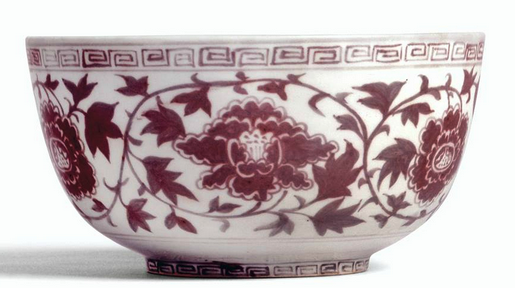
Founding reign. Underglaze red and blue-and-white emerge under state-directed kilns.
1399–1402
Brief transitional reign. Minimal distinct ceramic production recorded.
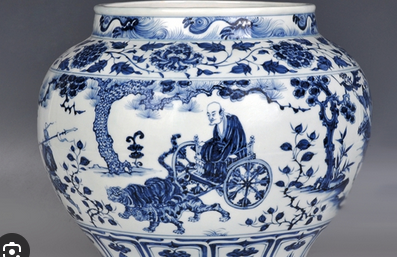
1403–1424
Imperial Kiln Factory established. Persian cobalt imports. Tianbai white at its finest.
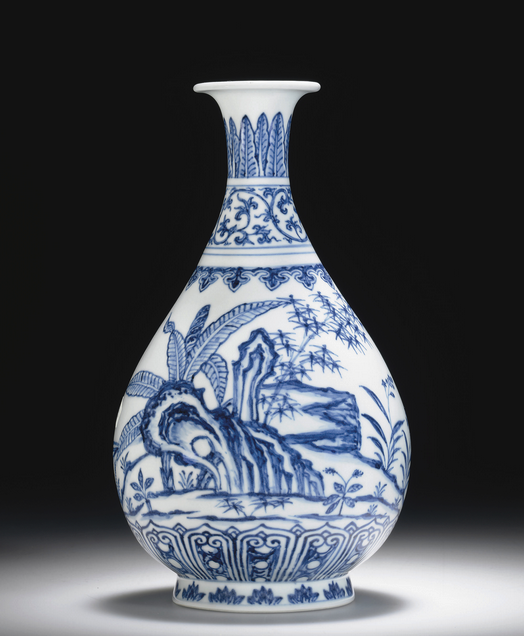
1425
Single-year reign. Administrative continuity, no marked stylistic shift.
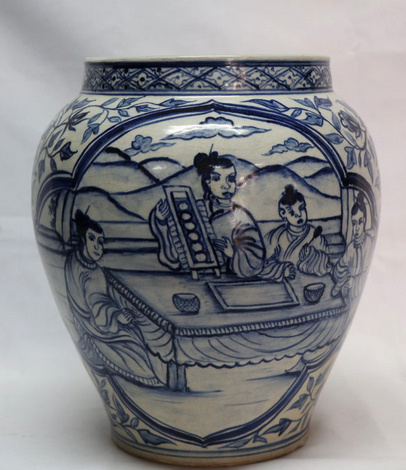
1426–1435
Peak blue-and-white. Orange-peel glaze. Domestic cobalt mastery.
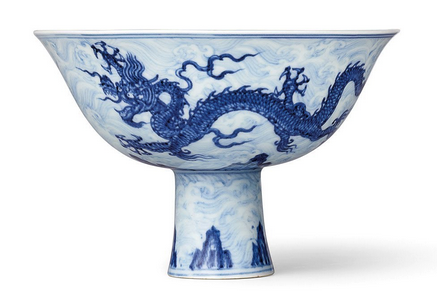
1436–1464
Interregnum gap. Imperial kiln production paused, private kilns continued.
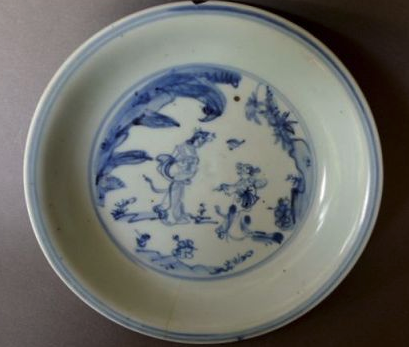
1465–1487
Doucai perfected. Chicken cups. Delicate enamels over underglaze blue.

1488–1505
Yellow-ground refinement. Restrained production under conservative patronage.

1506–1521
Arabic and Tibetan script motifs. Islamic influence at imperial kilns.
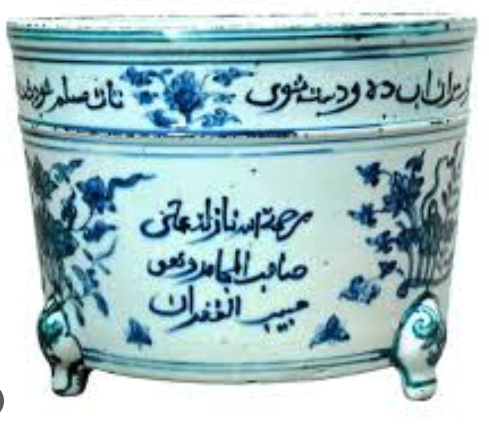
1522–1566
Daoist iconography. Wucai emerges. Long reign with prolific output.
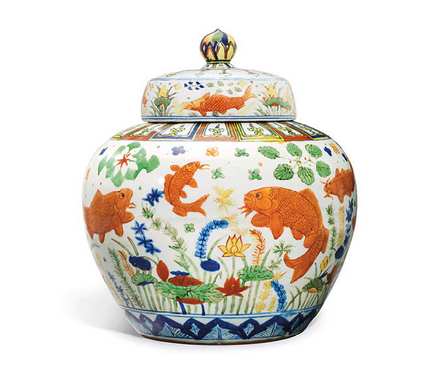
1567–1572
Brief stabilising reign. Continued Jiajing styles with minor refinements.

1573–1620
Wucai peak. Kraak export ware. Longest Ming reign, massive output.
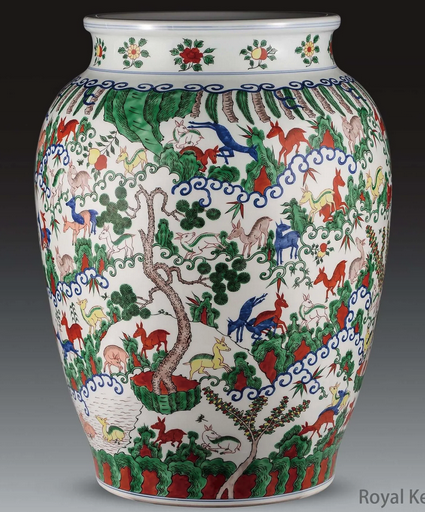
1620
Single-month reign. No distinct ceramic production attributed.
1621–1627
Folk-style freedom. Loose brushwork. Transitional ware precursors.

1628–1644
Final Ming reign. Transitional wares. Private kilns ascend as dynasty falls.

Material Development
Domestic cobalt — Zhejiang and Yunnan sources, warmer tone than Persian imports
Doucai technique — underglaze blue outlines, filled with overglaze enamels after second firing
Wucai five-colour enamels — red, green, yellow, blue, black in complex pictorial programmes
Reign mark system — six-character underglaze blue marks standardised attribution and authority
Representative Forms
Structural Continuity
The Ming period established the canonical forms and reign mark system that subsequent ceramic tradition would either emulate or contest. Qing emperors — particularly Yongzheng and Qianlong — would commission deliberate archaistic copies of Xuande and Chenghua wares, rendering Ming production both a living standard and a historical ideal to be recovered.
Reign Periods
Reign Periods
Continue exploring
The Ming dynasty formalised what Yuan had begun. Under the Yongle emperor (1402–1424), Jingdezhen was established as the sole supplier of imperial wares, and the Imperial Kiln Factory — Yuyaochang — brought state management to ceramic production for the first time.
The Xuande period (1426–1435) produced what many scholars regard as the finest blue-and-white porcelain ever made. Cobalt was now sourced domestically, the glaze had a distinctive orange-peel texture, and the painted dragons, lotus, and Sanskrit script achieved a controlled vitality unmatched before or after.
Later reigns — Chenghua, Zhengde, Jiajing, Wanli — each introduced new decorative registers: doucai (contrasting colours), wucai (five-colour enamels), and increasingly complex narrative programmes. The Ming vocabulary was not singular; it was cumulative, expansive, and internally contested.