Menu
The Tradition · Yuan Dynasty
1271 – 1368
The birth of blue-and-white. Cobalt from Persia. Form shaped for a world.
The Tradition · Yuan Dynasty
1271 – 1368
The birth of blue-and-white. Cobalt from Persia. Form shaped for a world.
Historical Context
The Yuan dynasty marks the most consequential rupture in Chinese ceramic history. Under Mongol rule, Jingdezhen was elevated to an imperial production centre — but the aesthetic demands of the court were radically different from those of the Song literati tradition.
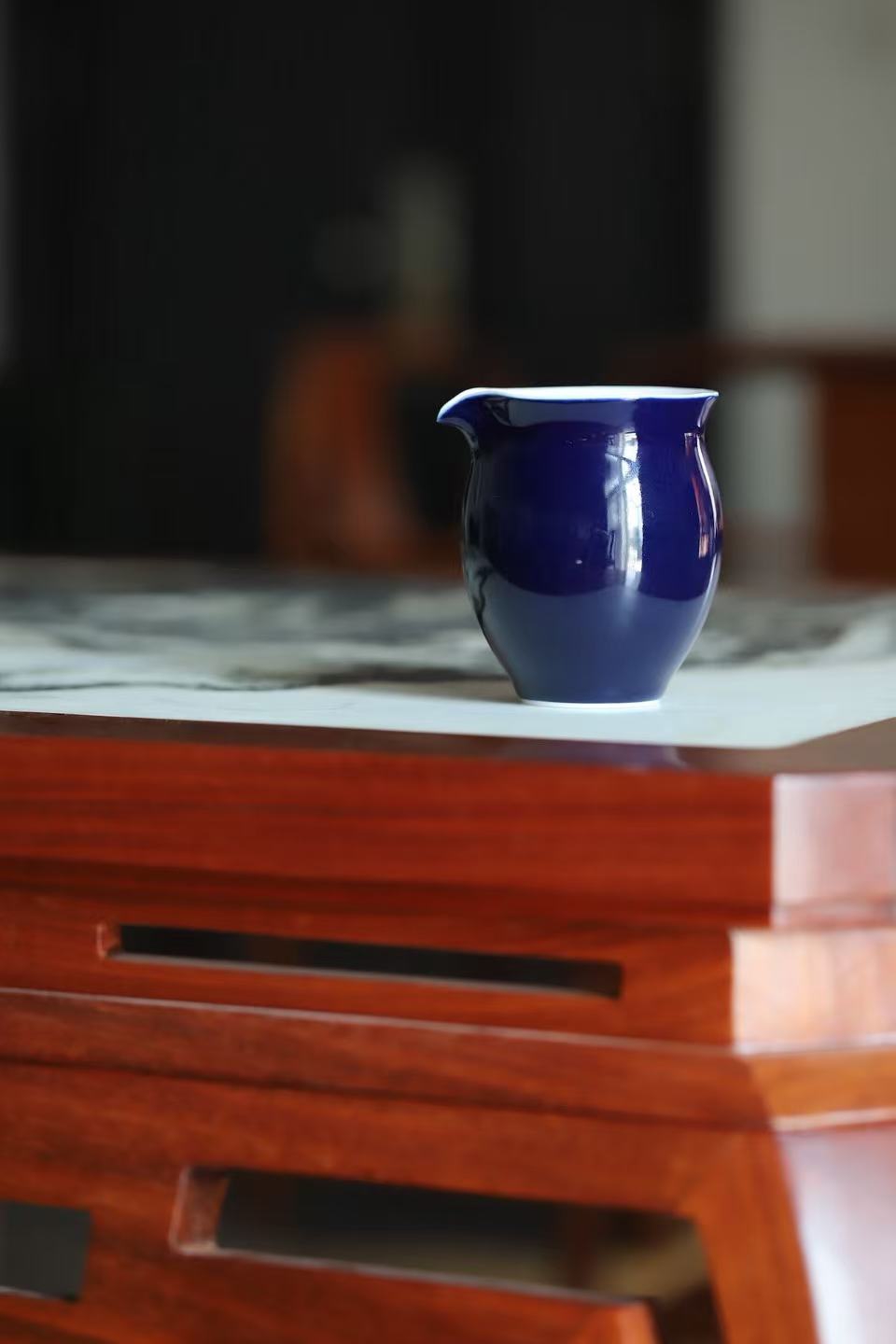
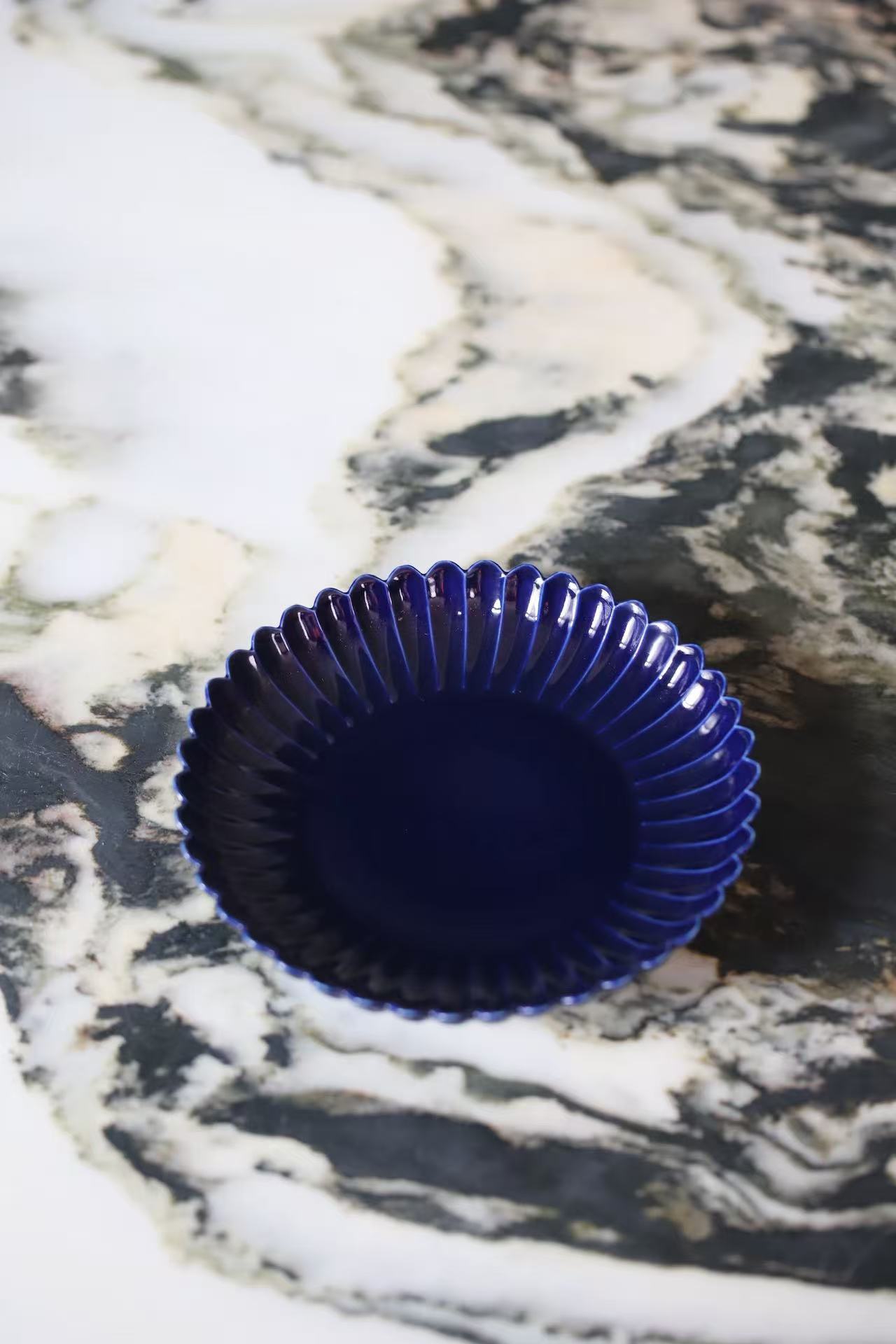
Cobalt oxide, arriving via the Silk Road from Persia, enabled a new decorative language: bold underglaze painting in deep lapis blue against a bright white body. The resulting blue-and-white porcelain was not a refinement of Song restraint — it was its deliberate counterpoint.
Yuan kilns also responded to international demand at unprecedented scale. Large dishes, ewers, and flasks were produced for export to the Islamic world, where their scale and painted decoration aligned with existing tastes. The pivot from introspective refinement to outward ambition had begun.
Material Development
Imported cobalt — ‘Islamic blue’ from Persia, via the Silk Road trade routes
Refined porcelain body — whiter, denser, more receptive to underglaze decoration
Shufu ware — opaque white glaze with moulded decoration, exclusive to the imperial court
High-temperature single-firing — blue applied directly to raw body, sealed under transparent glaze
Representative Forms
Structural Continuity
The decorative vocabulary established in Yuan — blue-and-white underglaze painting, large-scale form, global proportions — became the foundational language of Ming imperial production. The Yongle and Xuande emperors would later refine what the Yuan kilns had pioneered, elevating blue-and-white to the highest register of court ceramics.
Contemporary objects connected to this tradition
Continue exploring