
Menu
Porcelain · Technique
Cobalt painted on the porcelain body beneath a transparent glaze. Jingdezhen's dominant decorative tradition from the Yuan dynasty onward.
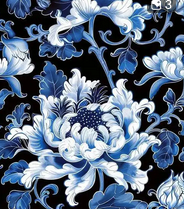
Technique
Cobalt oxide pigment is painted directly onto the unfired porcelain body, then sealed beneath a single transparent glaze and fired once at high temperature, typically above 1300°C. The blue does not exist until the kiln fires it — what the painter applies is a dull grey-black wash, and the finished colour only emerges from the chemical reaction between cobalt and glaze under reduction. There is no correcting a stroke once it is laid down; the brushwork is final at the moment of application.
Blue-and-white became Jingdezhen's dominant export and imperial system from the Yuan dynasty onward. Cobalt source shaped the palette by period: imported Persian Su Ma Li Qing cobalt produced the deep, iron-spotted blues of Yuan and early Ming pieces, while domestic Chinese cobalt, adopted from the mid-Ming period, gave a more even, lighter tone.
Quality is read in the control of line — the consistency of a brush stroke's width, the absence of bleeding into the glaze, and the evenness of tone across a single field of colour. Because the pigment sits under the glaze, it is chemically stable and resistant to wear, which is part of why blue-and-white ware from centuries ago still presents legible decoration today.
Contemporary objects connected to this tradition
Continue exploring
Material
CobaltDecorative system
Underglaze Decoration