Menu
Porcelain · Technique
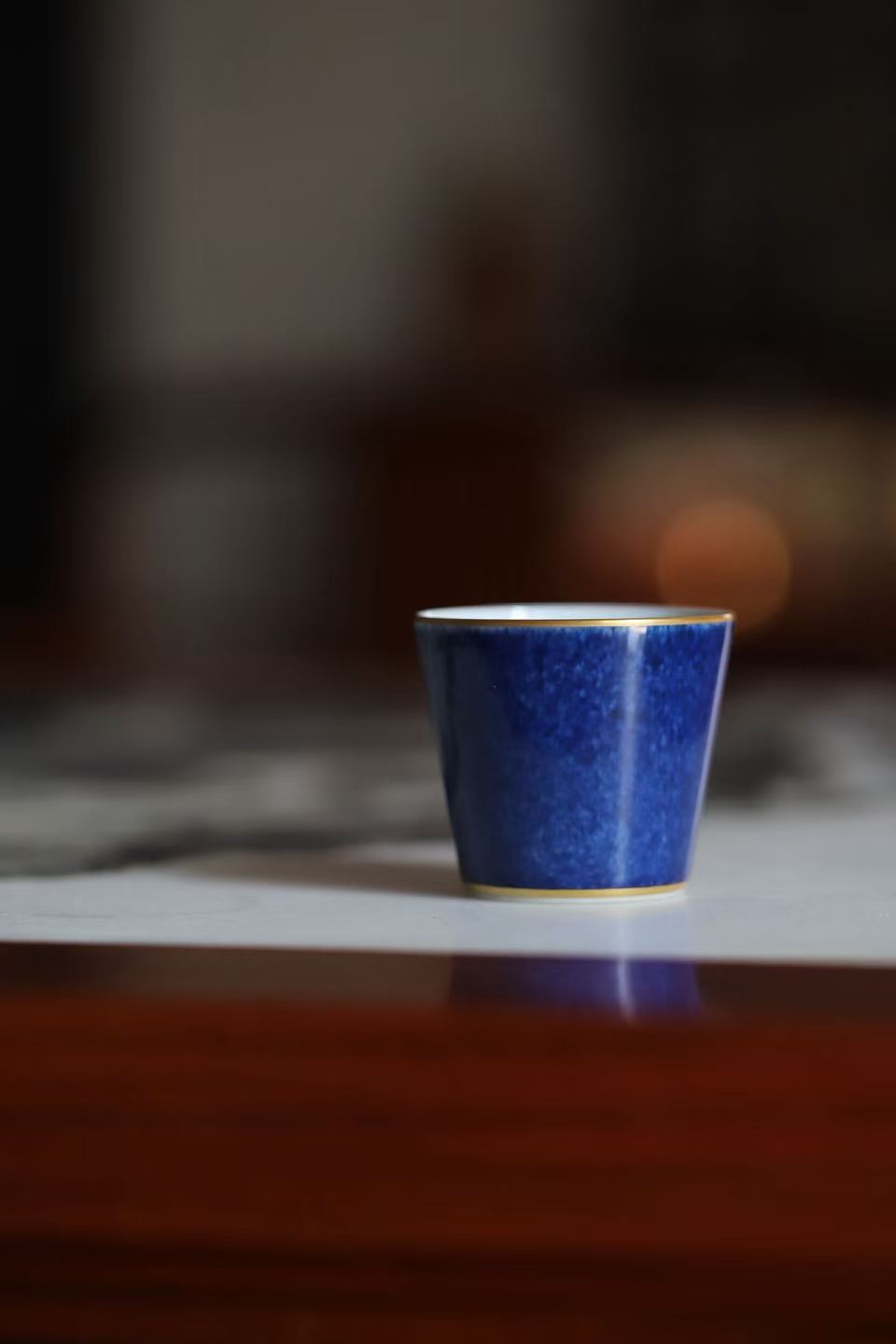
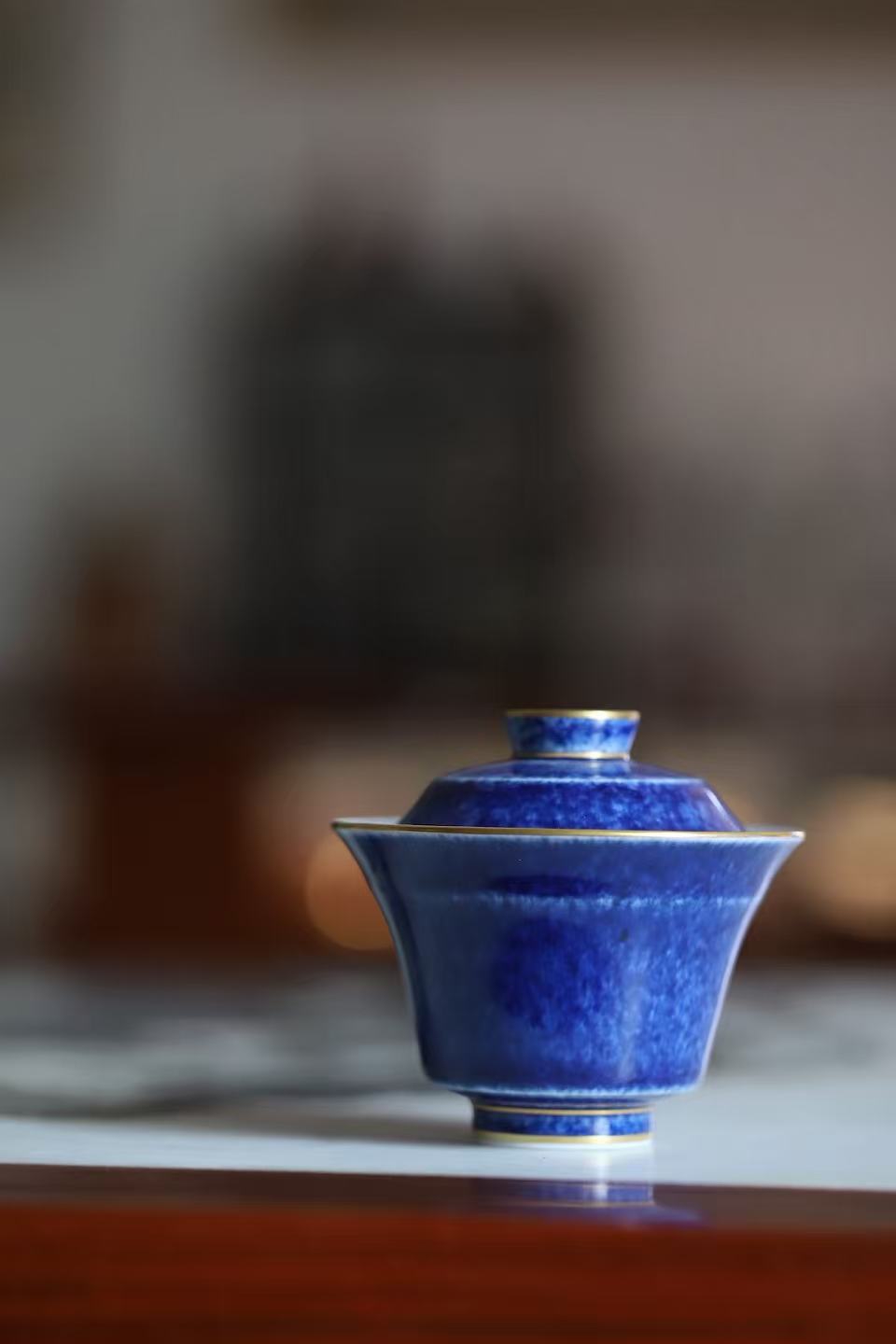
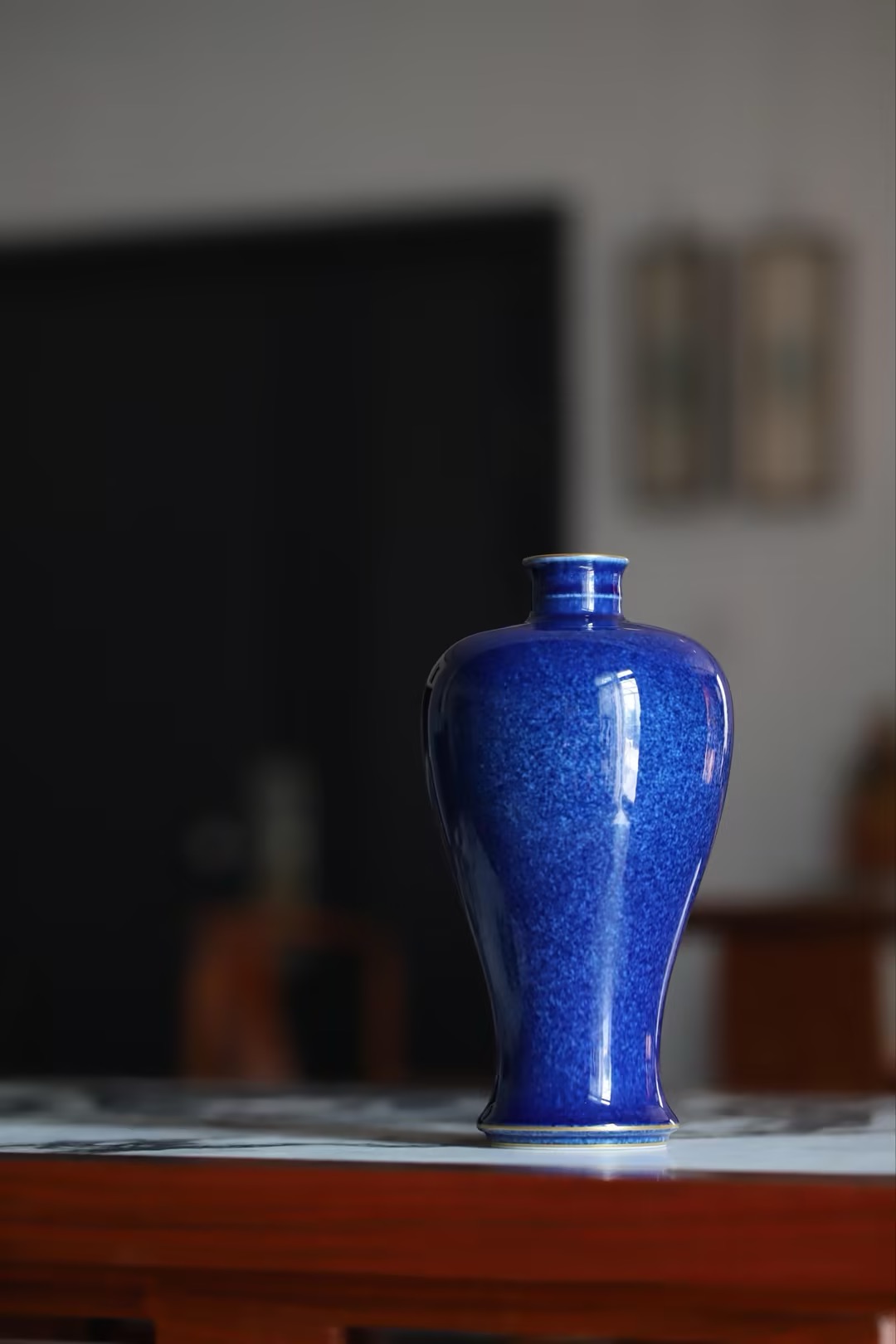
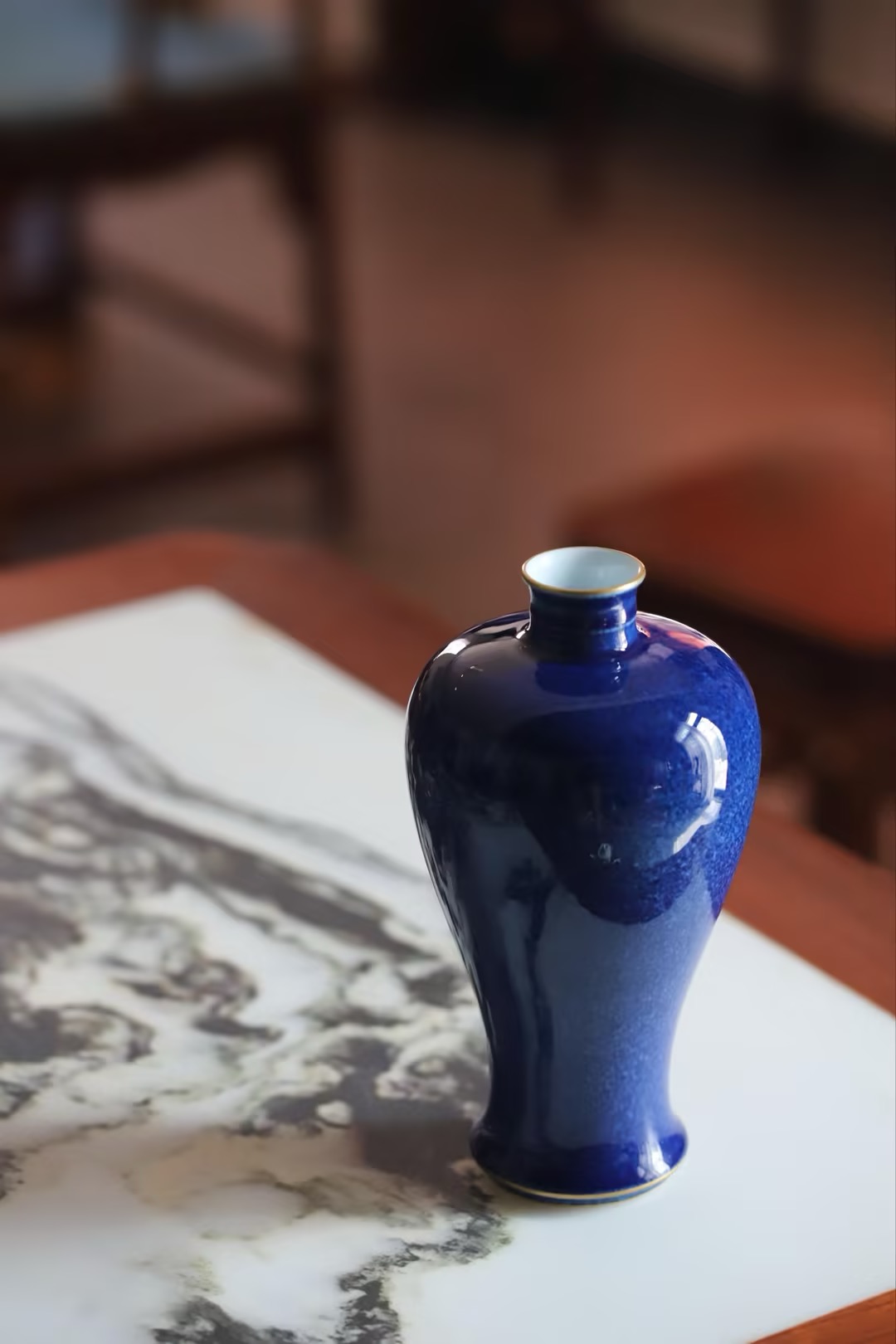
A powder-blue surface with a fine, granular character, historically made by blowing powdered cobalt onto the body before glazing.
Technique
Sǎlán (洒蓝), known in the West as powder blue, is best documented on Jingdezhen porcelain of the Kangxi period (late seventeenth and early eighteenth centuries). Museum records describe how powdered cobalt was blown onto the unglazed body through a bamboo tube closed at one end with fine gauze, before a clear glaze was applied. The technique is also recorded as 吹青 (chuīqīng, “blown blue”), and as “snowflake blue” for its scattered speckles; in Europe it became known as bleu soufflé. Reserved panels and gilt decoration were often added in the early eighteenth century.
Chinese accounts trace the technique to the imperial kilns of the Xuande reign of the Ming dynasty. Production then lapsed for almost two centuries before Sǎlán was revived under Kangxi and brought to new heights.
The maker describes Blue Fir’s powder-blue objects as a continuation of the Kangxi Sǎlán tradition, completed with gilt decoration. Further process details are added for individual objects only where the maker describes them.
Victoria and Albert Museum, London: vase, Jingdezhen, 1700–10 (Kangxi reign), collections record O178653.
Contemporary objects connected to this tradition
Continue exploring
Period
Qing · KangxiPeriod
Ming · XuandeMaterial
CobaltDecorative system
Underglaze DecorationForm
Meiping